Free Calculator

Heat Pump vs. Gas: Who Wins in 2026?

The answer surprises: With current BAFA subsidies and rising CO₂ tax, a heat pump often pays for itself in under 7 years. Calculate it for your building.

Calculate my savings

Modern house with efficient heating
5-8
Years payback period
Average for single-family homes
Up to 70%
BAFA subsidy
For eligible households
~3 t
CO₂ savings per year
Compared to gas heating
Building Data
A+
A
B
C
D
E
F
G
H
Efficient Inefficient
Selected: D (100-130 kWh/m²)
kWh
Or approx. 1800 m³ gas / 1800 L oil
Heat Pump
COP
BAFA Subsidies

Total subsidy: 50%
Subsidy amount: 10.000 €
Energy prices
ct/kWh
ct/kWh
ct/kWh
ct/kWh
ct/kWh
%
Annual Heating Costs
10-Year Cost Projection
Investment
Gross investment: 20.000 €
BAFA subsidy: -10.000 €

Net investment: 10.000 €
Payback period
6,2
years
Environmental Impact
CO2 with gas: 3.618 kg/year
CO2 with heat pump: 1.954 kg/year

Annual CO2 savings
1.664
kg CO₂
83
trees
11.100
km

Get non-binding quotes now

Receive 1-3 free quotes from qualified heating contractors in your region — based on your calculation.

  • Completely free and non-binding
  • Certified contractors in your area
  • Reply within 48 hours
Thanks! We'll get back to you within 48 hours.

What do your results mean?

Payback Period Guide
< 5 years Excellent! Your investment pays off quickly.
5-8 years Very good - typical for an average single-family home.
8-12 years Solid investment with long-term savings.
> 12 years Consider improving insulation or alternative systems.
When is a heat pump ideal?
  • Well-insulated buildings (highest efficiency)
  • Older buildings with high consumption (high absolute savings)
  • Floor heating or low-temperature radiators
  • Eligible for BAFA subsidies (up to 70%)
  • Planning to stay in the home long-term

BAFA Subsidies 2026: Get up to 70%

Subsidy Type Rate Requirement
Base subsidy 30% Heat pump replaces fossil heating
Income bonus +30% Household income < 40,000 €/year
Speed bonus +20% Replace fossil heating by 2028
Maximum total 70% Max. 30,000 € for single-family homes
Example Calculation
Installation cost: 20.000 €
With 50% subsidy: -10.000 €

Your net cost: 10.000 €
Annual savings vs gas: ~1.500 €
Payback: ~6.7 years

Heating Systems Comparison

Criterion Heat Pump Gas Oil Pellet
Investment cost ★★☆☆☆ ★★★★☆ ★★★☆☆ ★★☆☆☆
Operating costs ★★★★★ ★★★☆☆ ★★☆☆☆ ★★★★☆
CO₂ footprint ★★★★★ ★★☆☆☆ ★☆☆☆☆ ★★★★☆
Future-proof ★★★★★ ★★☆☆☆ ★☆☆☆☆ ★★★☆☆
Maintenance ★★★★★ ★★★★☆ ★★★☆☆ ★★☆☆☆
Space requirement ★★★★☆ ★★★★★ ★★☆☆☆ ★★☆☆☆

★★★★★ = Excellent, ★☆☆☆☆ = Poor. Ratings based on typical German market conditions.

Comparison Calculator: Air-Source Heat Pump vs. Gas Heating

This free comparison calculator shows you the cost difference between an air-to-water heat pump and your current gas heating. Enter your living space and consumption, and the air-source heat pump cost calculator estimates electricity costs, gas costs including CO₂ tax, your BAFA subsidy, and the payback period.

Air-source heat pumps (air-to-water) are the most common type in Germany because they need no drilling and are quick to install. Over the full lifetime, the comparison between gas heating and an air-source heat pump usually comes out in favour of the heat pump — especially with rising CO₂ prices on gas and oil.

Frequently Asked Questions

Yes, often it is! While efficiency is lower in older buildings, the high heating demand means higher absolute savings - especially with rising CO₂ tax on fossil fuels. With BAFA subsidies up to 70%, even older buildings can see payback periods under 10 years. Key factors: available heating surface (floor heating ideal, but large radiators work too) and willingness to accept slightly higher flow temperatures. A professional energy assessment can determine the best approach.

Modern air-source heat pumps produce about 35-50 dB at 3 meters distance - comparable to a quiet conversation or refrigerator. Legal requirements mandate minimum distances from neighbors' property lines. Many models have "quiet mode" for nighttime operation at even lower noise levels.

Yes! Modern air-source heat pumps work down to -20°C or colder. However, efficiency decreases in extreme cold - this is already factored into the seasonal performance factor (JAZ/SCOP). Ground-source heat pumps are unaffected by outside temperatures as the ground stays around 10°C year-round.

COP (Coefficient of Performance) measures efficiency at a specific test point (e.g., outside temp 7°C, flow temp 35°C). JAZ (Jahresarbeitszahl/Seasonal Performance Factor) is the real-world average over an entire heating season. JAZ is more realistic for cost calculations - a COP of 4.5 typically translates to a JAZ of 3.0-4.0.

A typical heat pump for a 150m² house uses 4,000-6,000 kWh of electricity per year. At a heat pump electricity rate of 25 ct/kWh, that's 1,000-1,500€/year. Compare this to 2,000-2,500€/year for gas heating (including CO₂ tax). The exact amount depends on your home's insulation and the heat pump's efficiency (JAZ).

Now is ideal for several reasons: The speed bonus (20%) is only available until 2028. CO₂ tax is at 55-65€/t in 2026 and will transition to EU ETS 2 in 2027. Installation wait times have decreased from peak levels. Plan in spring/summer for installation before the next heating season.

No, but it helps. Heat pumps are most efficient with low flow temperatures (35°C ideal). Floor heating naturally works at these temperatures. With conventional radiators, you may need: larger radiators, a slightly higher flow temperature (reducing efficiency), or wall heating in some rooms. A professional can calculate what works for your home.

Air-source heat pump: 2-4 days for a straightforward replacement. Ground-source with probes: 1-2 weeks including drilling. From first contact to commissioning: typically 3-6 months due to planning, permits, and scheduling. BAFA application should be submitted BEFORE ordering the system!

An air-to-water heat pump for a 150m² home costs roughly 1,000-1,500€ per year in electricity, compared to 2,000-2,500€ per year for gas heating including CO₂ tax. The exact gap depends on insulation, the heat pump's efficiency (JAZ), and your electricity tariff. Use the comparison calculator above with your own consumption to get a precise air-source heat pump cost estimate for your building.

An air-source heat pump in a single-family home typically uses 4,000-6,000 kWh of electricity per year. At a heat pump tariff of around 25 ct/kWh, that is about 1,000-1,500€ per year. Well-insulated homes with floor heating land at the lower end, older buildings with radiators at the higher end. The cost calculator above works it out for your specific living space and consumption.

Yes. This is a free comparison calculator that puts a heat pump side by side with gas, oil, and pellet heating. It compares investment, operating costs, BAFA subsidy, CO₂ tax, and the payback period over up to ten years — so you can see at a glance whether an air-to-water heat pump or your current gas heating is cheaper for your building.

About this calculator

Our Data Sources
  • BDEW – German energy industry association for energy prices
  • destatis – Federal Statistical Office for consumption data
  • BAFA – Federal Office for subsidy guidelines
  • UBA – Federal Environment Agency for CO₂ emission factors
Calculation Methodology

This calculator uses simplified models based on typical German market conditions. Actual costs may vary based on your specific situation, local energy prices, and installation requirements. For precise figures, consult a certified energy advisor.
Last updated: January 2026
CO₂ tax rate: 55-65 €/t (2026)
Energy price base: German average
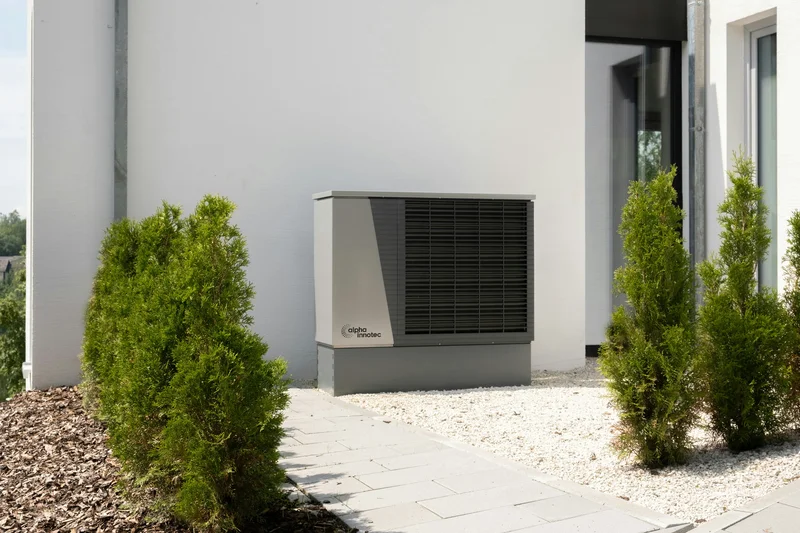
Modern air-source heat pump outdoor unit

Ready for the next step?

Awerka helps installers create professional quotes, manage projects, and handle invoicing - all in one platform.

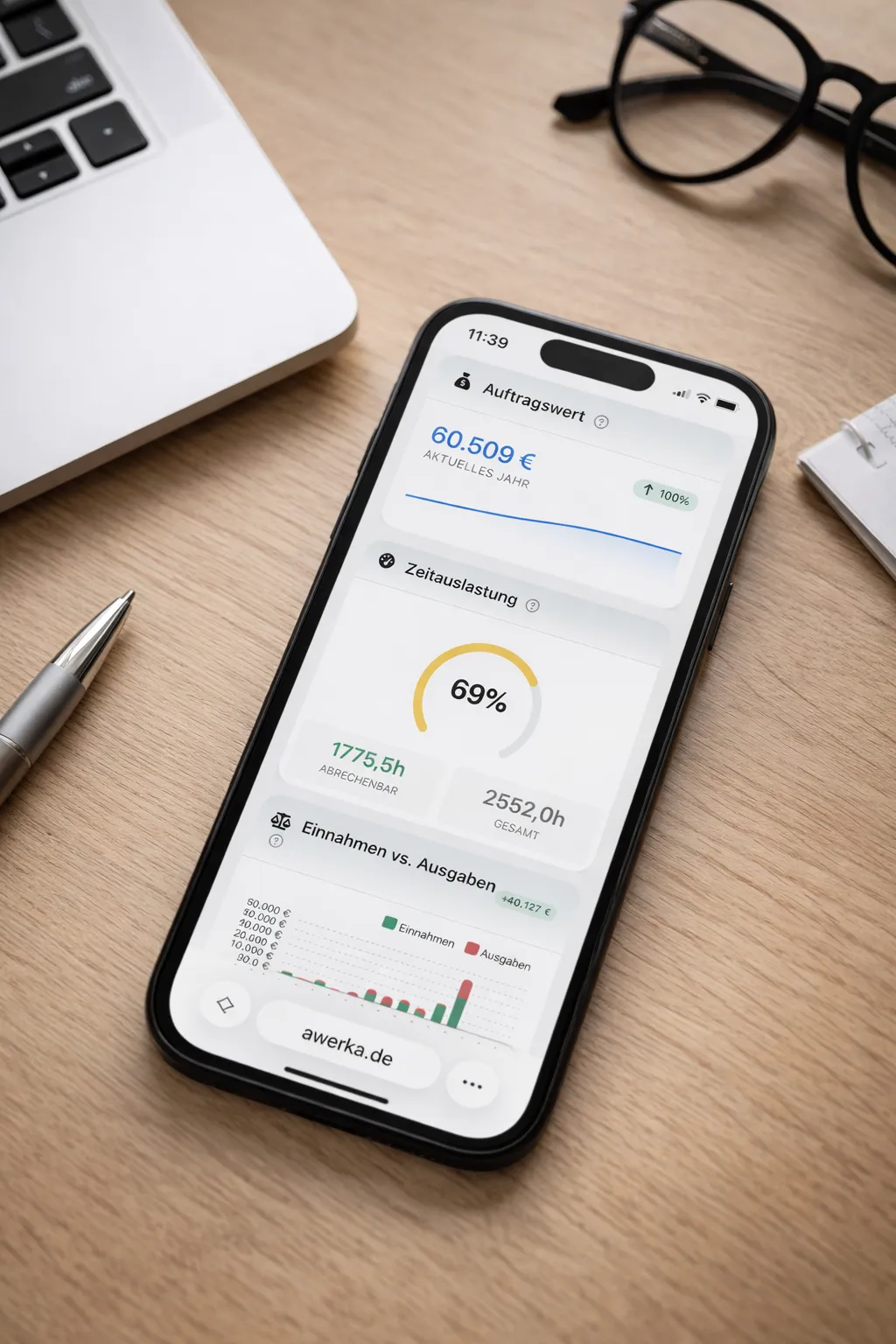
Awerka for Mobile

Manage your business on the go. Access customers, projects, and time tracking from anywhere with our mobile app.


Awerka business overview on mobile and desktop